How to Sell Temporary Displays into Grocery & Specialty Grocers (and Win)
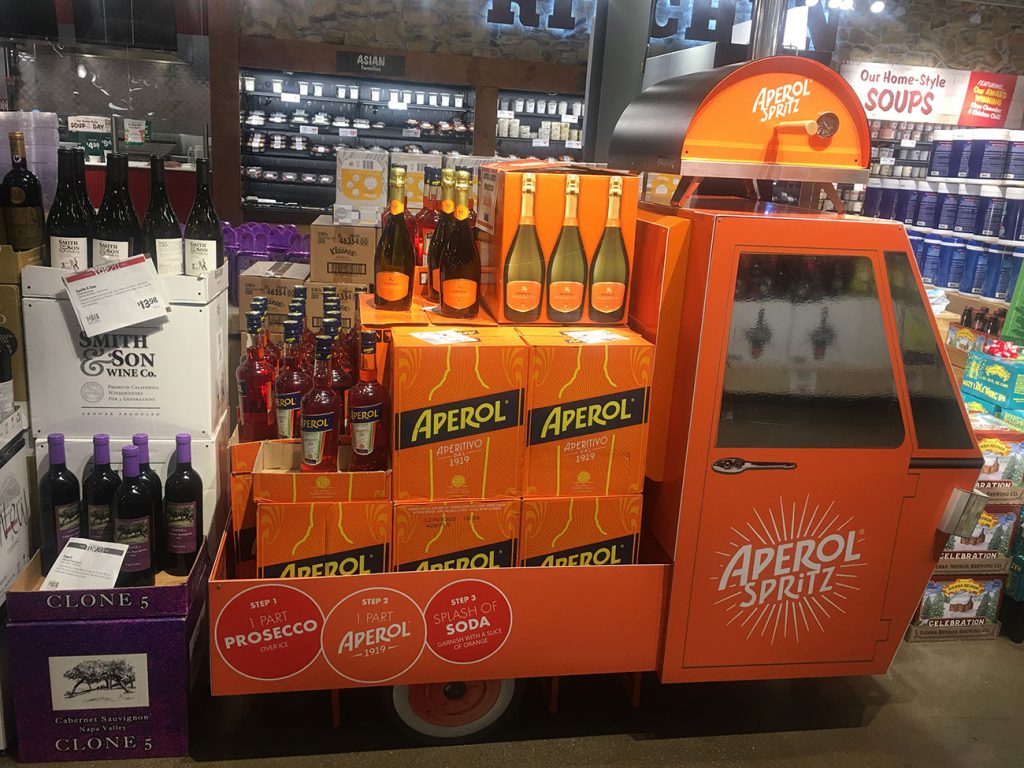
In grocery retail, especially within specialty and fresh-focused banners, temporary displays aren’t just merchandising tools: They are one of the most powerful levers for influencing shopper behavior at the exact moment decisions are made.
The opportunity is massive: 76-82 percent of grocery purchase decisions happen in-store, and impulse buying accounts for a significant share of total sales.
But grocery is also one of the hardest environments to sell into. Tight margins, labor constraints, and operational complexity mean your display must do more than look good — it must work hard.
In this article we will review
- What differentiates the grocery mindset in general and specialty grocers in particular
- The business case for effective grocery displays
- The role placement plays in effective displays
- Three real-world examples where temporary displays can directly impact business
- The implementation mistakes that can ruin a display’s success
- How fewer displays lead to higher impact
- Key sections to include in your proposal
- A final thought on the power of temporary displays
Understanding the Grocery Mindset (It’s Different)
Selling into grocery, especially specialty grocers, requires a shift in thinking compared to big box retail. Grocery buyers are focused on:
- Turn and Velocity (Not Just Margin) Grocery buyers are focused on how quickly a product sells, not simply how much profit it generates per unit. A high-margin product that sits on the shelf for weeks can be less attractive than a lower-margin item that consistently sells through and generates repeat purchases. Buyers evaluate sales velocity, units sold per store per week, and category contribution to determine whether a product earns valuable shelf space.
- Shrink and Perishability: Products that spoil quickly, have short shelf lives, or are prone to damage create financial risk for retailers. Excessive shrink from expiration, spoilage, or handling issues can erode category profitability and increase operational complexity. Buyers often favor products with strong shelf stability, predictable demand, and packaging that helps minimize waste while maintaining quality.
- Labor and Replenishment: Every product creates work for store employees, from stocking shelves and rotating inventory to managing displays and checking expiration dates. Buyers consider how much labor a product requires throughout its lifecycle in the store. Items that are easy to stock, fit efficiently on shelves, and require less frequent replenishment can provide operational advantages that make them more attractive than products with similar sales performance.
- Shopper Flow and Trip Missions: Buyers think carefully about how products fit into the way customers already shop. Some items drive destination trips, while others support fill-in shopping, meal planning, snacking, or impulse purchases. Products that align with common shopping missions, complement adjacent categories, or encourage larger basket sizes can deliver value beyond their individual sales numbers. Understanding where and why shoppers purchase a product helps buyers determine its role within the overall store experience.
- Category Role and Incremental Growth: Retailers want products that grow the category rather than simply shift sales from one brand to another. Buyers look for evidence that a new item attracts new shoppers, increases purchase frequency, or expands consumption occasions. Products that bring incremental sales to the category often have a stronger case for distribution than those that merely cannibalize existing shelf offerings.
Unlike general merchandise, grocery is driven by repeat trips and habit behavior. Your display needs to interrupt that routine without disrupting the store.
What Makes Specialty Grocers Unique
Specialty grocers (natural, organic, gourmet, regional chains) add another layer of complexity to the major concerns of typical food retailers:
- Strong emphasis on brand storytelling
For example, Trader Joe’s positions itself as a neighborhood market built on discovery, adventure, and global exploration. The in-store aesthetics of hand-drawn signs and a mix of tropical and nautical themes reinforce this sense of adventure. - Higher expectations for aesthetic quality and materials
Whole Foods differentiates their in-store environment through natural, earth-conscious materials and localized architectural touches. They aim to “seduce the customer … through: decoration, lighting, furniture, color blocking, signage, theatrical displays and visual merchandising.”
- More focus on local, seasonal, and experiential merchandising
Dubbed the Disney World Super Markets, regional chain Stew Leonard’s combines limited, curated product selections, animatronics, and costumed characters with peak-season local produce to build a highly loyal customer base.
In these immersive environments, a display isn’t just a sales tool: it contributes to the unique brand experience.
The Business Case: Why Displays Matter in Grocery
If you want a buyer to say yes, lead with data, not design. Aesthetics are subjective. Powerful displays have proven, quantifiable effects on consumer in-store behavior.
Proven Impact Stats:
- Endcap and secondary displays can lift sales 23-30 percent or more.
- Some studies show sales spikes up to 1000percent vs. shelf placement in high-impact zones.
- Sixty-two percent of grocery purchases are impulse-driven.
- Cross-merchandising increases related item sales by approximately 15 percent.
- Free sampling drives around 20 percent purchase lift in that category.
What This Means for Your Pitch
Harness data like this to answer the age-old marketing question “What’s in it for you?” when addressing the buyer.
Instead of leading with: “Here’s a great display.”
Tie your display to measurable results, for example:
“This program is designed to deliver a 20-30% lift in incremental sales during peak traffic windows.”
Hard data on real-life ROI: that’s the language grocery buyers respond to.
Where Displays Actually Win in Grocery Stores
Not all placements are equal. In all retail and especially in grocery, location is strategy. Even the most impactful display will not work as well if no one sees it.
High-Impact Zones
Angle for these placements to get the most out of your marketing spend:
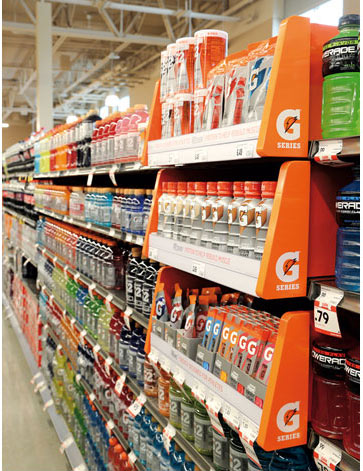
- Endcaps: These eye-catching end points of the aisle drive up to 30 percent sales lift and major visibility. Endcaps alone generate nearly 30 percent of aisle traffic exposure, making them one of the most valuable pieces of real estate in the store.
- Power aisles/racetrack: The store’s perimeter loop and main thoroughfare both boast more shoppers and capture full-trip traffic
- Perimeter transitions: The relatively open spaces between departments like produce, deli & meat or bakery, provide more potential to grab customers’ attention than their over-crowded counterparts, and also catch shoppers in the vulnerable spot between the categories on their list, when they are more open to impulse purchases.
- Checkout and queue lines: With a captive audience looking for distraction, these waiting areas offer the most potential for impulse conversion.
Real-World Shopping Scenarios
Theory is one thing, but how do these ideas work in real life? The following examples offer specific activations that convert customers with the strategic use of temporary displays.
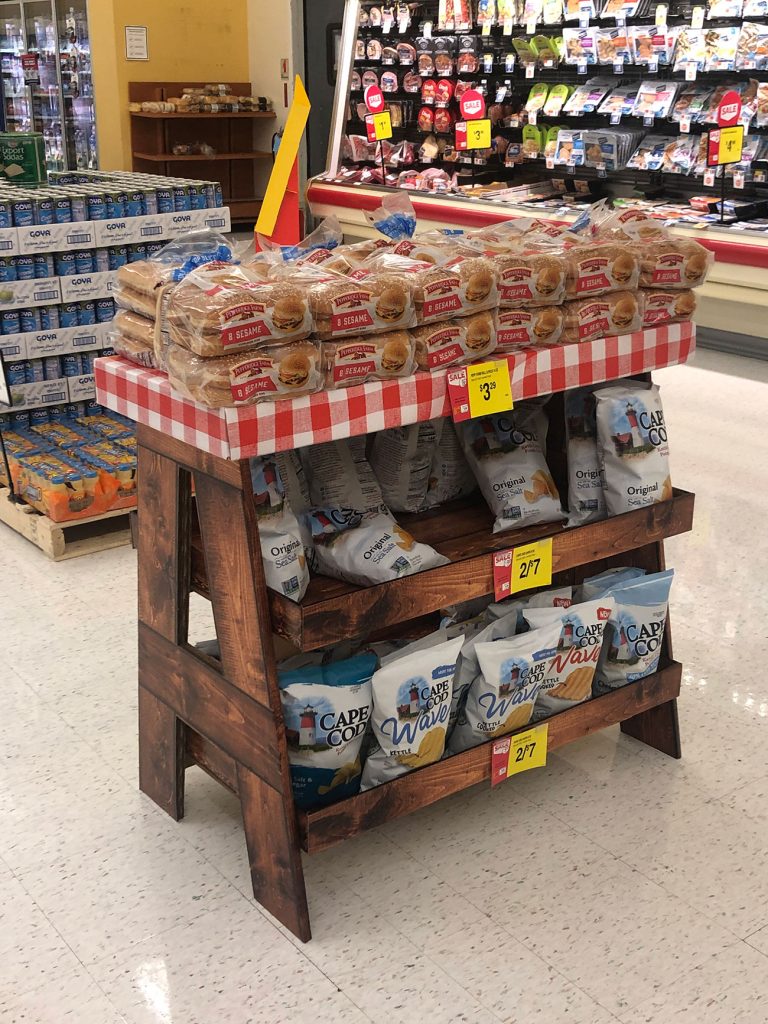
1. Seasonal Dump Bin (Center Store Grocery)
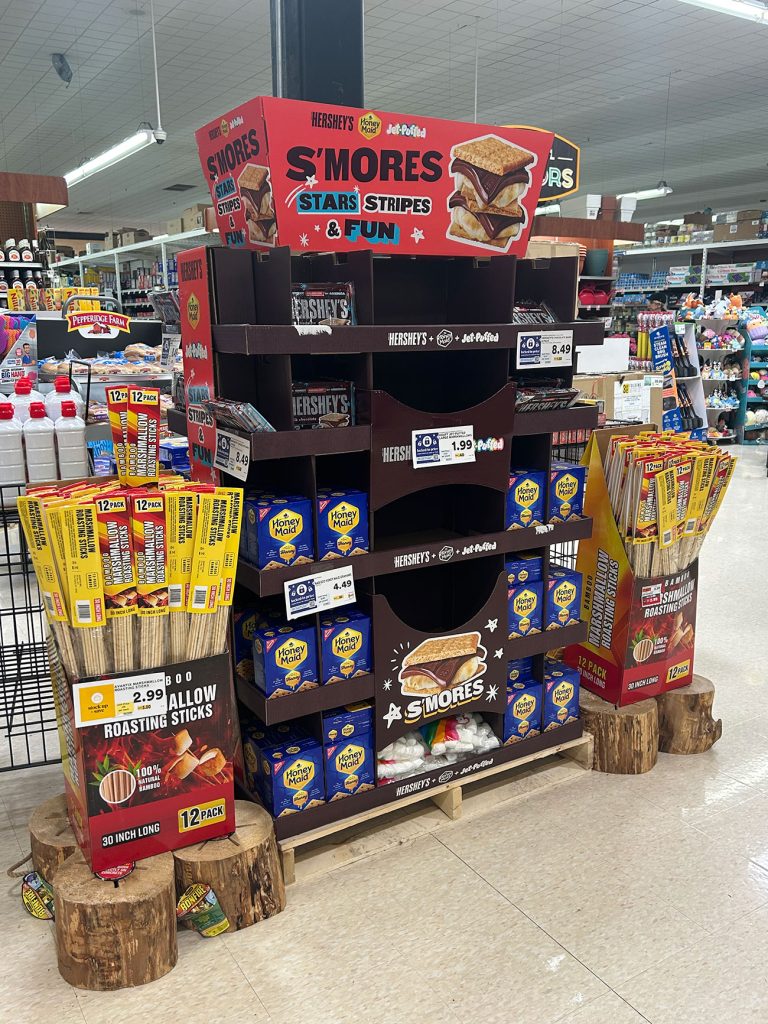
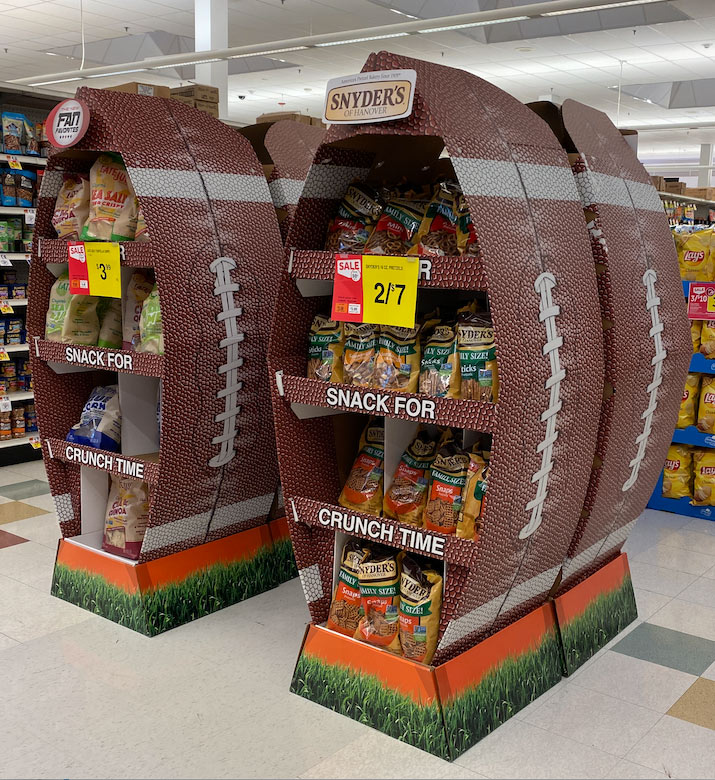
A mid-sized grocery chain might introduce seasonal snack displays on portable racks positioned in high-traffic zones and tied to holidays. By placing eye-catching, high-margin products in high-traffic zones, retailers typically drive 30 to 35 percent increases in impulse purchases.
Why it works:
- Clear theme: A holiday theme tying together different items with a seasonal or holiday theme reflected in display design that complements packaging reinforces the
- High visibility: “Historically, ‘theater’-type displays, placed in high-traffic areas of the store and decorated with a variety of POS materials, typically work the best” at retail, according to Kenneth Hausmann, Tops’ category business manager for candy.
- Easy grab-and-go format: “Forty percent of total seasonal candy purchases are made on impulse, and the primary catalyst is seeing an item in an aisle or display, explains Tim Quinn, VP of trade development for Chicago-based Mars Wrigley Confectionery.
2. Cross-Merchandising in Specialty Grocery
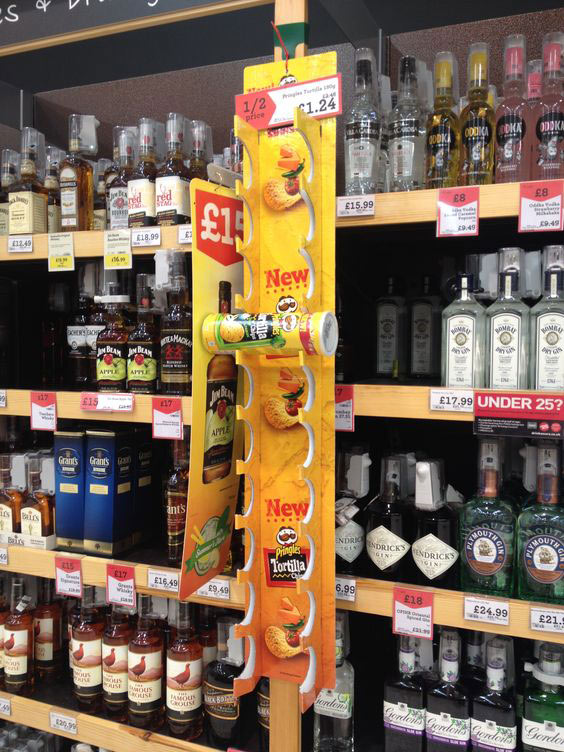
Convenient and inspired food pairings delight customers and increase sales. “Position products to fit shoppers’ purchasing patterns,” advises the Specialty Food Association. “From cheese to olives to charcuterie to bread might be one such logical sequence. Many retailers put olives next to the cheese case, or even in the cheese case, because olives are such a natural add-on.” These types of combinations can potentially increase basket size and create an approximately 15 percent lift in linked categories.
Why it works:
- Solves a “meal idea” for the shopper: Doing the intellectual labor of meal planning alleviates the burden on the customer, making them feel like they received a service along with a product.
- Creates a grab-and-go solution: “Put the complementary item where people can easily grab it,” recommends the Specialty Food Association. “Very few people will make an effort to track something down.”
- Aligns with specialty grocer storytelling: Elevated, region-specific combinations of unique items support the specialty retailer’s mission to educate and entertain
3. Sampling + Display Combo (Fresh/Perimeter)
Combining product sampling with interactive displays along a grocery store’s fresh perimeter is a highly effective retail marketing strategy. By placing ready-to-eat tastes next to complementary, high-margin ingredients, retailers inspire immediate meal planning, lower buyer uncertainty, and drive substantial in-store sales lift. Shoppers who interact with sampling displays are 20 percent more likely to purchase in that category. Best use cases could include new product launches, premium or unfamiliar items, or specialty/private label introductions.
Why it works:
- Offers a sensory experience: Nothing anchors a memory like the senses, so when customers see, feel, smell and taste a sample they are not only more likely to purchase it on impulse, but also to remember it on future trips.
- Includes actionable signage: Incorporate quick, visual cues such as QR codes that link to a complete recipe on your store’s website.
- Creates a cross-departmental pairing: Extend the reach of fresh perimeter items by placing them where they normally wouldn’t sit. Cross-merchandise specialty cheeses next to the meat counter (for burgers) or fresh fruit near the bakery for desert combos.
The Hidden Liability: Operational Reality
Here’s the hard truth: many displays don’t fail because of design; they fail because they’re not store-friendly. Grocery stores are labor-constrained environments. If your display:
- Takes too long to build
- Blocks traffic
- Is hard to restock
- Creates shrink or mess
it won’t get replenished or reordered. As much as each potential shopper could be considered your audience, another, equally important audience is each store employee who has to interact with your vision in their reality. Remember: if store teams don’t love it, it won’t survive.
What Buyers Want (But Won’t Always Say)
By saving the retailer time and space, you’re saving them money. That’s why, besides an eye-catching display and a product that will bring customers back into the store, buyers are looking for displays with:
- Set-up time of five minutes or less!
- Assembly or set up requiring minimal tools or instructions
- Easy access for stocking product
- Stable but movable footprint for easy repositioning
- Efficient case pack integration to save space
The best marketing idea in the world doesn’t stand a chance against the realities of implementation. Easy assembly, inexpensive storage, repeatable results across multiple markets and locations no matter the level of staff training: these logistical requirements ensure success and assure retailers your pitch will work in-store, not just on the page.
The Hidden Opportunity: Fewer Displays, More Impact
The average number of in-store displays has declined in recent years. While this drop could be seen as a net negative for marketers looking to promote their products, there’s a key insight many miss: less is more.
- Retailers are becoming more selective: They consider the shopper’s over-all experience, choosing to reduce noise rather than fill every square foot.
- Each display must justify its space: If you can’t enrich the shopper’s experience and increase the retailer’s bottom line, you won’t get invited to the party.
- Quality is more important than quantity: Fewer displays in-store means fewer displays competing for each shopper’s attention.
At the same time, investment in in-store retail media is increasing, meaning displays are becoming more strategic, not less. In other words, it’s harder to get in, but more valuable when you do. The opportunity here for products that can get display space is enormous. With the right pitch, your brand can make the most of this featured position.
How to Position Your Sell-In
When pitching to grocery or specialty grocers, you need more than a picture and a paragraph to set your product apart. Effective proposals should include:
1. A Clear Sales Story
Front-load your pitch with the numbers that matter most:
- Expected lift (based on benchmarks): Estimate the potential increase in sales using results from comparable programs or industry data.
- Incremental vs. cannibalized sales: Show that the display will generate new revenue rather than simply shift sales away from existing products.
- Category impact: Explain how the program can increase category sales, attract new shoppers, or create additional purchasing occasions
2. A Store-Ready Plan
Demonstrate that your pitch is more than a pipedream; it’s a practical roadmap that considers the retailer’s bottom line by accounting for:
- Setup time: Specify how quickly and easily store employees can assemble and position the display.
- Replenishment flow: Explain how employees can restock products efficiently while keeping the display organized and appealing.
- Store labor impact: Demonstrate that the program requires minimal employee time, training, and ongoing maintenance.
3. Shopper Insight
Show them you did your homework on what sets their shopper apart and prove that your product is the perfect fit. Explain:
- Why this works for their shopper: Connect the display to the customer’s preferences, needs, purchasing habits, and expectations.
- How it aligns with trip missions (quick trip vs. stock-up): Show how the display serves shoppers whether they are making a fast fill-in visit or completing a larger planned shop.
4. A Seasonal or Promotional Hook
Integrating with an existing seasonal promotion helps support the retailer, promote related merchandise and reinforce their seasonal messaging. Tie to key grocery moments such as:
- Summer grilling: Pair products with cookout essentials, outdoor entertaining occasions, and convenient meal solutions.
- Holiday entertaining: Help shoppers discover festive foods, hosting necessities, and easy additions to holiday gatherings.
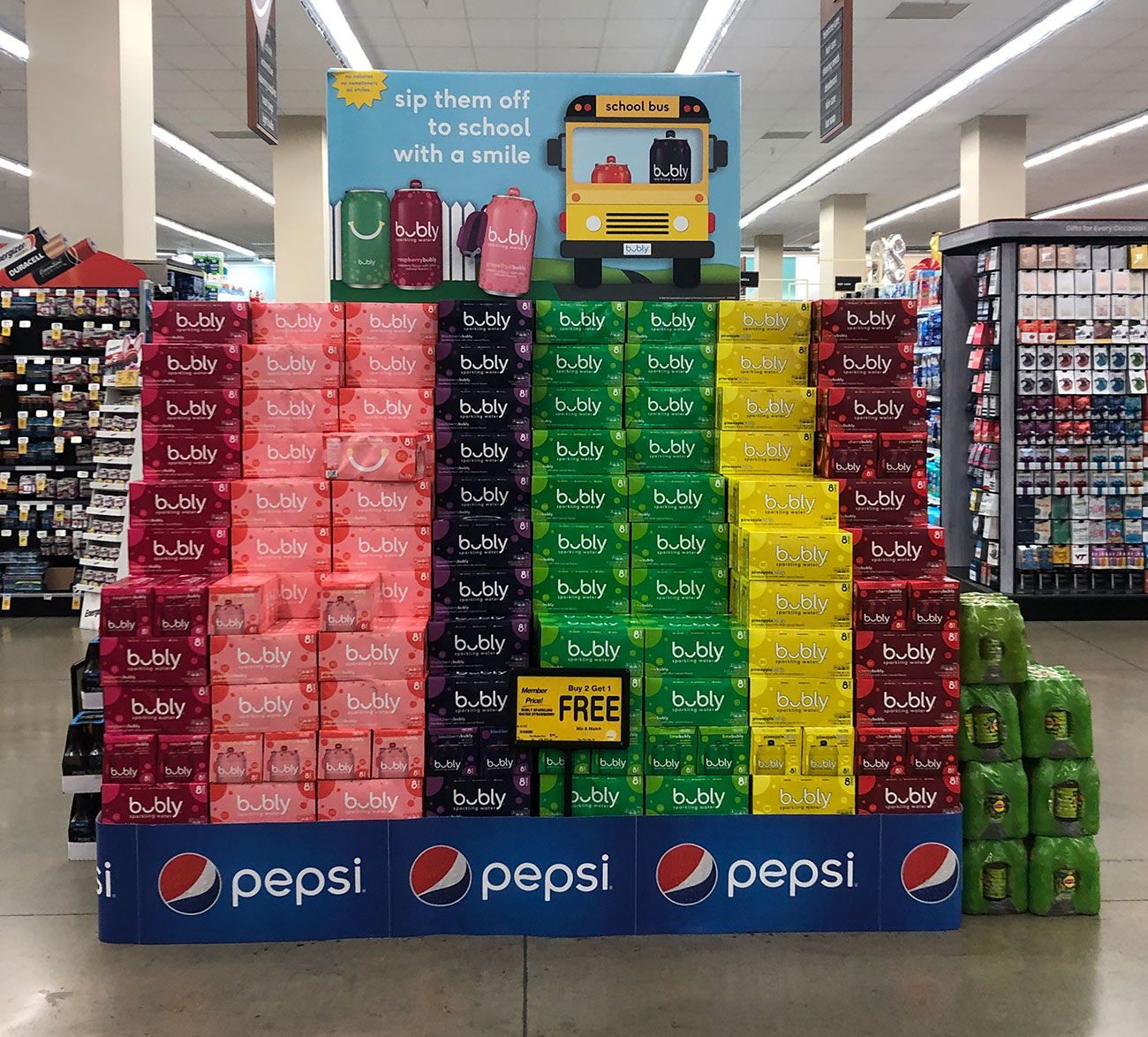
- Back-to-school: Highlight convenient snacks, lunchbox staples, and quick meals for busy families.
- Health and wellness resets: Feature products that support shoppers’ nutrition, fitness, and self-care goals.
By anticipating the retailer’s main concerns and providing actionable answers, your proposal will make business sense.
Final Thought: Temporary displays can maximize shoppers’ attention while minimizing retailer effort
In grocery and specialty retail, temporary displays sit at the intersection of shopper psychology, store operations, and category growth. They capture attention, encourage impulse purchases, and help shoppers discover products beyond their original shopping lists.
Temporary displays work because they meet shoppers in the moment:
- When 70%+ of decisions are still being made in the aisle
- When attention is limited
- And when the right visual cue can turn intent into action
The brands that win aren’t the ones with the most displays, they’re the ones that make each display impossible to ignore and easy to execute. Make inroads in retail grocery by developing the right display for your product and your placement. At Medallion Retail, our 60+ years of experience will ensure you get the most return on your investment.