Seasonal Experiential Program
Hershey
An immersive experience with a monster payoff.

TYPES | HOW WE DO IT | CASE STUDIES | FAQs
Point-of-purchase (POP) displays provide brands an opportunity to reach customers where it counts the most: right where the purchasing decision is made. Medallion Retail creates custom POP displays for retailers and manufacturers, helping their products stand out and increasing sales.
Point-of-purchase displays showcase products in the retail environment where they’ll be purchased, creating a conduit for influencing consumers’ behavior as they shop. With a variety of design options, specific types of point-of-purchase displays can serve different functions or exist in different areas of the retail environment.
Medallion Retail specializes in creating custom display solutions to fit your brand, marketing goals, and budget. Some different options for models of POP displays include:
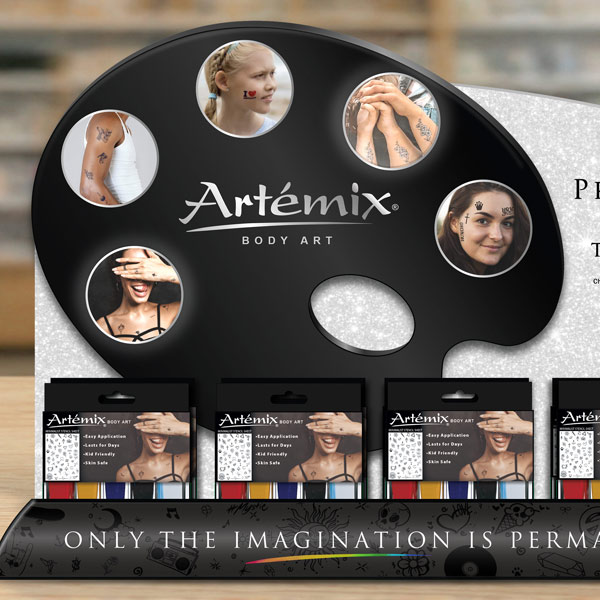
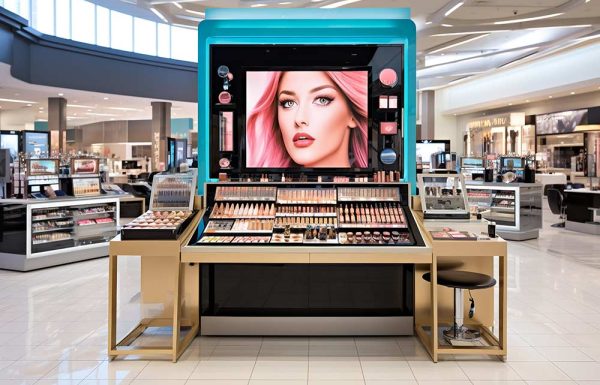
These are compact merchandising units placed on checkout counters or service desks to showcase smaller products where shoppers can easily see and reach them. They encourage impulse purchases and give brands the opportunity to introduce new items or highlight current promotions.
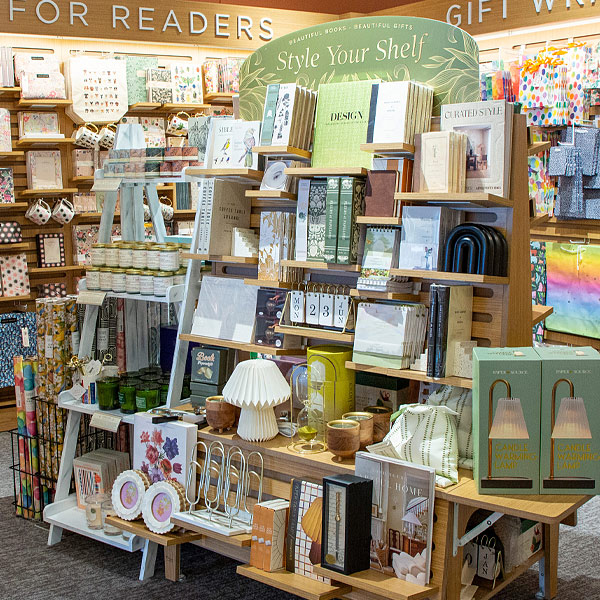
These freestanding units live in aisles or other high-traffic areas to showcase products beyond their regular shelf placement. They create a dedicated brand presence and can support product launches, seasonal campaigns, and cross-merchandising.
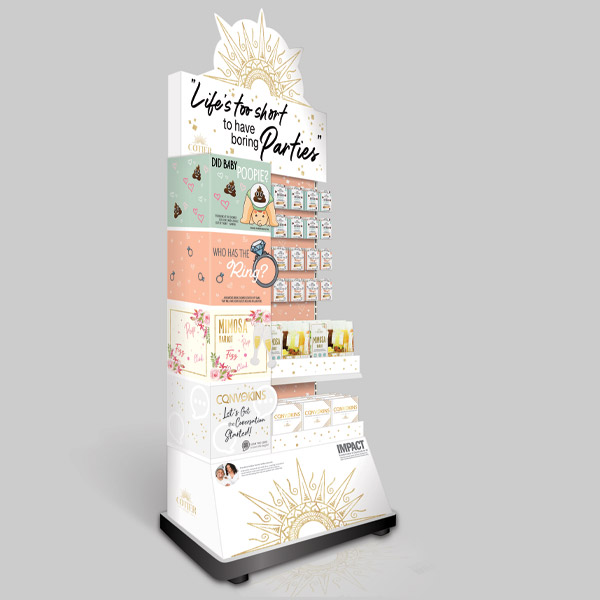
The coveted endcap supplies the location for these highly effective displays, offering prominent visibility to shoppers moving through the store even if they don’t venture down every aisle. They provide space to feature promotions, tell a cohesive product story, and encourage purchases outside a shopper’s planned route.
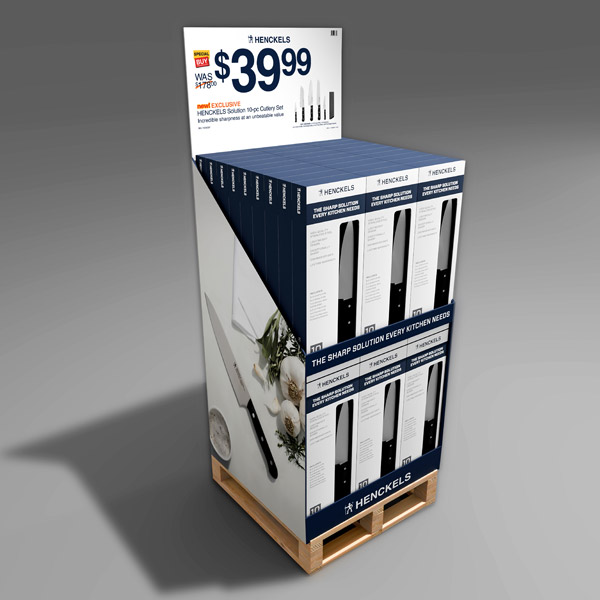
Common in warehouse clubs and high-volume retail settings, pallet displays present merchandise directly on the shipping pallet, often using stacked products, branded trays, or a surrounding display structure. By combining large product capacity with efficient stocking, they can create a strong promotional presence.
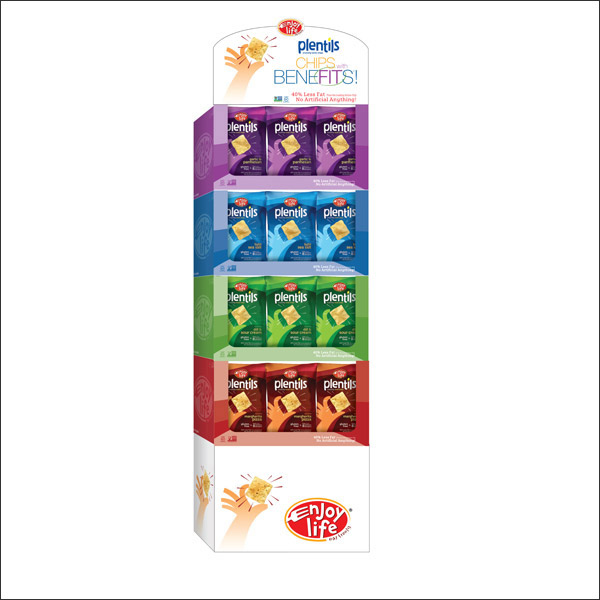
Dump bin displays are open-top merchandising containers that hold loose or individually packaged products for shoppers to browse and select. Often used for small items, seasonal merchandise, or special offers, they encourage discovery and communicate abundance and value.
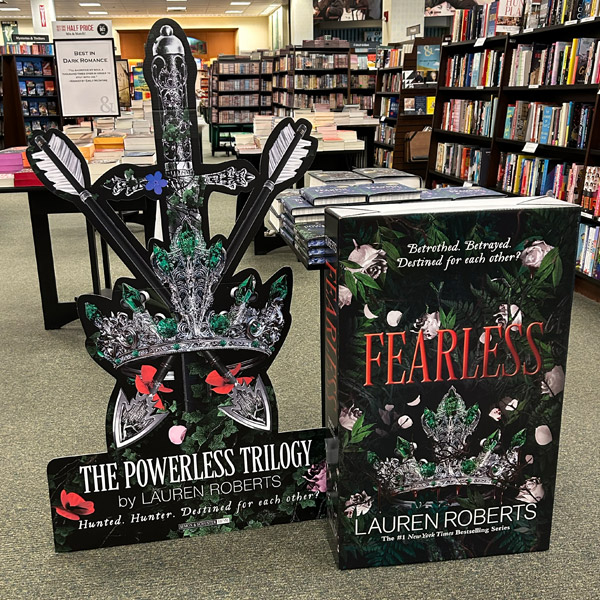
Standee displays are freestanding promotional signs, often featuring life-size figures, product imagery, or custom shapes designed to attract attention. Typically used alongside merchandise rather than to hold it, they reinforce campaign messaging and direct shoppers toward featured products.
Within these design types, there are several categories of display based on their expected length of use and corresponding materials:
Temporary retail displays are designed for short campaigns typically lasting a few weeks to a few months, such as seasonal promotions, limited-time offers, or product launches. Using materials like corrugated cardboard, paperboard, and printed cardstock creates lightweight, low-cost construction appropriate for this reduced window of use.
Halfway between temporary and permanent, semi-temporary retail displays support extended promotions or recurring merchandising needs, typically remaining in stores for several months. Possible substrates could include heavy-duty corrugated board, foam PVC, acrylic, and lightweight wood, depending on product weight, store conditions, and expected use.
Built for ongoing use with durable construction that withstands repeated stocking and shopper interaction, permanent POP displays often last a year or longer. Suggested materials that hold up to continued use include powder-coated steel, aluminum, solid wood, plywood, durable laminates, and acrylic, with replaceable graphics to keep messaging current.
Keeping your marketing goals in mind from the start creates an end result that aligns with your product, your location, your customer and your budget. At Medallion Retail, our decades of experience ensures we know the right questions to ask when collaboratively concepting with our clients.
Check out these 10 mistakes to avoid when building a POP display!
RELY ON MEDALLION RETAIL’S EXPERTISE TO COLLABORATE ON YOUR SUCCESS.
At Medallion Retail, our strategic process includes developing the concept, value engineering, prototyping & production and harnesses our expertise in the following disciplines:

Every successful in-store marketing program starts with a clear strategy grounded in shopper insights and retail expertise. By aligning your goals with how customers navigate and make purchasing decisions, we develop targeted, engaging POP displays that connect shoppers with your brand and drive results.
Effective POP display design combines visual impact with practical execution. We consider every detail, from materials and production timelines to shipping costs and ease of store setup, to create displays that attract shoppers, simplify installation for retail staff, and maximize your investment.
Our manufacturing team brings your brand vision to life through thoughtful material sourcing, value engineering, and precise fabrication. We manage every step, from prototyping to rollout, to deliver engaging retail displays that balance quality, cost efficiency, and consistent execution.
We keep your retail program on track with inventory management and fulfillment that accounts for every component, from receipt and verification to storage and delivery. With nearly six decades of experience, we anticipate logistical challenges, keep you informed, and deliver materials organized, complete, and ready to install.
When approaching the creation of a retail point-of-purchase display, several considerations keep the design aligned with function and marketing goals.
Hierarchy of Messaging: Effective retail signage highlights what sets your product apart, whether it’s quality, value, convenience, sustainability, or innovation. Distill that advantage into a clear, concise message shoppers can grasp at a glance. This Unique Selling Proposition (USP) will drive your messaging.
Display Type: How long your campaign will run, how much interaction your display will invite, in what environment your display will reside, and what your budget requirements are will all impact your choice of POP display type: temporary, semi-temporary or permanent.
Competitive Landscape: What are your competitors doing right? What do they get wrong? Besides providing examples of what to do and what to avoid, exploring your product or category’s competitive landscape will indicate what shoppers are already seeing and what you will have to do differently to stand out.
Design Possibilities: Creative concepting turns your product’s unique selling proposition into a compelling in-store presence. A skilled POP display agency will explore fresh ways to express that advantage, introducing possibilities you may not have considered while keeping the strongest ideas aligned with your goals and budget. Staying open to unexpected approaches, and trusting your agency to give those ideas focus, can lead to a display that captures attention and gives shoppers a clear reason to choose your brand.
Budget Considerations: Your bottom line affects the potential ROI of your display campaign. With the experience to understand hidden costs and anticipate potential complications, Medallion Retail can help you create a POP display solution that gives you the most for your money.
Sustainability in point-of-purchase (POP) displays starts with choosing materials that fit the campaign’s purpose, lifespan, and retail environment. Recycled-content corrugated board, responsibly sourced paperboard, and certified wood can support more thoughtful material sourcing, while reducing unnecessary components helps limit waste and shipping weight. Inks, coatings, adhesives, and mixed-material construction also matter, as they can affect whether a display is accepted by local recycling programs.
Smart design considers what happens after the promotion ends. Durable, reusable structures with interchangeable graphics can support multiple campaigns, while displays that separate easily into individual materials can simplify recycling. By balancing material choices with product weight, shipping requirements, and store-level handling, brands can create effective displays that use resources efficiently throughout their lifecycle.
An effective point-of-purchase display brings your brand into focus when shoppers are ready to buy. From introducing new products to supporting seasonal promotions, the right display connects creative design with the practical demands of the retail environment.
Explore answers to common questions about planning, designing, and producing point-of-purchase displays.
A point-of-purchase (POP) display is a branded fixture or presentation designed to draw attention to a product inside a retail store. POP displays help merchandise stand out, communicate key benefits, and encourage shoppers to take a closer look. They can appear throughout the store, including aisles, endcaps, countertops, and checkout areas.
POP displays come in a variety of formats to suit different products, spaces, and promotional goals. Common options include:
Floor displays: Freestanding units that showcase products in designated areas.
Countertop displays: Compact displays for checkout counters and service desks.
Endcap displays: Product presentations positioned at the ends of store aisles.
Pallet displays: Larger presentations designed for high-volume merchandising.
Shelf displays: Trays, risers, shelf talkers, and other elements that help products stand out within existing shelving.
POP displays make products easier to notice and give shoppers a reason to consider them. They can highlight a promotion, explain a product’s benefits, introduce a new offering, or bring complementary items together. Results depend on several factors, including placement, messaging, pricing, product availability, and store execution. A strong display supports the shopping experience by making the next step clear.
An effective display attracts attention, communicates quickly, and makes the product easy to shop. It should have a clear message, recognizable branding, and a layout suited to the merchandise. Practical details matter just as much as appearance. The display needs to hold the product securely, fit its assigned space, and be straightforward for store teams to assemble and replenish.
Start with your campaign goal, product dimensions and weight, intended placement, and expected display lifespan. A short-term promotion may call for a lightweight corrugated display, while an ongoing merchandising program may benefit from a durable fixture. Retailer requirements, shipping costs, assembly needs, and replenishment plans should also help guide the choice.
Common materials include corrugated cardboard, paperboard, wood, metal, and acrylic or other plastics. Displays may also combine materials to achieve a particular look, strength, or function.
The right choice depends on the weight of the merchandise, the retail environment, the campaign duration, and the budget. Materials should support both the creative concept and the display’s everyday use.
Temporary displays are generally designed for limited campaigns, seasonal promotions, or product launches. They often use lightweight materials such as corrugated cardboard.
Permanent displays are built for extended use and typically use more durable materials such as metal, wood, or acrylic. Semi-permanent displays fall between the two, supporting programs that require more durability without a permanent installation.
Yes. Displays can be adapted to meet different retailers’ space requirements, merchandising guidelines, product assortments, and promotional calendars. A coordinated display program can maintain a consistent brand identity while adjusting dimensions, messaging, or product capacity for individual retail environments.
A clear brief helps establish the right direction. Useful information includes:
Campaign objectives and target shoppers.
Product dimensions, weight, packaging, and quantity per display.
Retailer specifications and intended placement.
Brand guidelines, artwork, and required messaging.
Display quantities and delivery locations.
Budget, launch date, and expected campaign duration.
Assembly, packing, and replenishment requirements.
Product samples and photos of the intended retail space can also help inform the design.
Pricing depends on the display’s size, materials, structural complexity, printing, quantity, and finishing requirements. Prototyping, product packing, freight, and delivery to multiple locations can also affect the total investment. A useful estimate considers the full progra — from design and production through shipping and in-store setup — rather than the manufacturing cost alone.
Timing varies with the complexity of the design, material availability, order quantity, and approval process. A custom project may include concept development, structural design, prototyping, testing, artwork approval, production, and shipping. Sharing your required in-store date early helps the team build a realistic schedule and identify important deadlines.
A prototype helps confirm that the display looks and functions as intended before a full production run. It can reveal issues with product fit, stability, assembly, or access to merchandise.
Testing with actual products is especially useful for checking weight capacity and understanding how the display performs as shoppers remove items.
A display needs to arrive in good condition and be manageable for the people setting it up. Some displays ship flat to reduce shipping volume; others ship assembled or prepacked with merchandise to simplify store setup. The right approach depends on freight costs, product protection, staff time, and retailer requirements. Planning these details early helps prevent problems at rollout.
Sustainability can be considered through material selection, efficient use of resources, reduced packaging, replaceable graphics, and designs that are easier to separate for disposal or recycling.
The best approach depends on the display’s purpose and lifespan. A reusable fixture may suit an ongoing program, while a display made with fewer material types may simplify end-of-campaign handling. Recyclability claims should reflect the finished display and the recycling options available where it will be used.
Start by defining the campaign’s objective. Depending on the program, useful measures may include sales lift, units sold per store, product sell-through, shopper engagement, and retailer feedback. Where possible, compare performance with a relevant baseline or similar stores without the display. Account for promotions, pricing changes, stock levels, and placement so the results are interpreted accurately.
Bring your product, campaign goals, and retail requirements together in a display designed to attract attention and convert shoppers to buyers. Contact our team to discuss your point-of-purchase display project.
These case studies showcase unique examples of effective POP displays.

An immersive experience with a monster payoff.
Year-round production for 600+ locations.

Nontraditional signage for eye-catching messages.